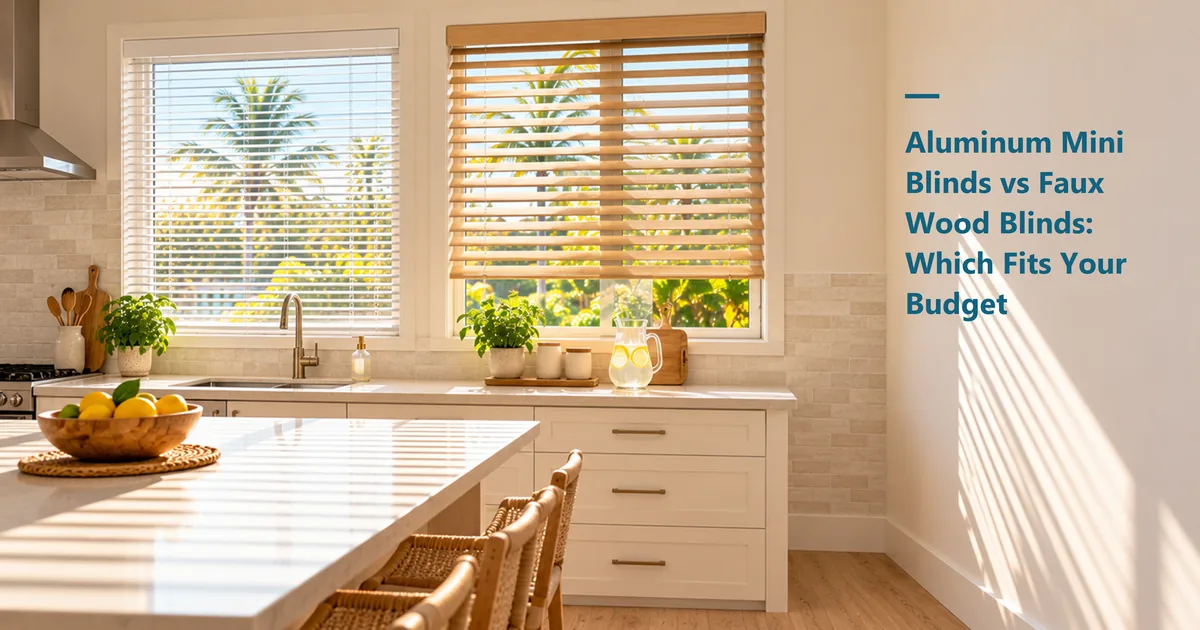
Aluminum mini blinds use thin metal slats and are usually the more affordable option, while faux wood blinds use thicker synthetic slats that cost more but look closer to real wood. In Miami, aluminum mini blinds suit a tight budget and high-moisture spots, while faux wood blinds suit rooms where appearance matters more than the lowest price. Palace Interior Design, Inc. builds both across South Florida.
Key Takeaways
- Aluminum mini blinds use thin, lightweight metal slats and typically cost less than faux wood.
- Faux wood blinds use thicker synthetic slats with a wood-grain look, which raises the price but improves the finish.
- Both resist moisture well, making them solid picks for a Miami kitchen or bathroom.
- Aluminum blinds come in a wider range of colors, while faux wood sticks mostly to wood-tone finishes.
- Neither is the wrong choice. Budget, room type, and desired look usually settle the decision.
A Hialeah homeowner furnishing a rental unit or a budget-conscious room faces a familiar question: aluminum mini blinds or faux wood blinds? Both get the job done. Both resist Miami’s humidity reasonably well. But they land in different price ranges, and the difference shows up in the finish, not just the receipt.
We’ll walk through how each one is built, how they compare on cost and durability, and which rooms tend to favor one over the other. If you haven’t decided on a broader category yet, our guide to blinds vs shades vs shutters covers that first.
Let’s start with what makes aluminum mini blinds the budget-friendly pick.
What’s the difference between aluminum mini blinds and faux wood blinds?
Aluminum mini blinds use thin, lightweight metal slats, usually 1 inch wide, that tilt and raise with a cord or wand. Faux wood blinds use thicker synthetic slats, often 2 inches wide, made to resemble real wood grain. Both resist moisture, but aluminum blinds are generally the more affordable of the two, while faux wood blinds offer a heavier, more furniture-like look.
What Are Aluminum Mini Blinds Made From?
Ever needed window coverings for a whole house fast, without blowing the budget on day one? That’s exactly where aluminum mini blinds come in.
Aluminum mini blinds are made from thin, rolled aluminum slats, typically 1 inch wide, connected by cords or a ladder tape system. They’re lightweight, which makes them easy to mount and simple to raise or lower.
- Available in a wide range of colors, often 20 or more finishes
- Resist moisture well, since metal doesn’t absorb water the way wood can
- Lightweight construction keeps shipping and installation straightforward
In a Hialeah rental property or a home office that just needs reliable coverage, aluminum mini blinds are often the starting point. Most 1-inch aluminum slats hold up well for 5 to 8 years under normal daily use.
Are aluminum mini blinds a good budget option?
Aluminum mini blinds are typically the more affordable choice between the two, since the material and manufacturing process cost less than synthetic wood-grain slats. They still resist moisture and come in a wide color range, which makes them practical for kitchens, offices, and rental units. Your consultant can confirm current pricing for your exact windows during a free in-home consultation.
|
Not sure if aluminum blinds fit your budget and room? Talk it through with our team at no cost. |
How Do Faux Wood Blinds Compare in Material and Look?
Picture a Coral Gables living room where you want the warmth of wood without the price tag or the humidity risk. That’s the gap faux wood blinds are built to fill.
Faux wood blinds use thicker synthetic slats, often a PVC or composite blend, finished with a wood-grain texture. The added thickness and finish give them a heavier, more substantial look than aluminum.
| Feature | Aluminum mini blinds | Faux wood blinds |
|---|---|---|
| Slat width | Usually 1 inch | Usually 2 inches |
| Weight | Lightweight | Heavier, more rigid |
| Finish options | Wide color range | Wood-tone finishes |
| Moisture resistance | Strong | Strong |
That table covers the 4 factors that come up most in a Doral or Kendall consultation. Faux wood slats typically run thicker than real wood, too, which helps them resist bending over years of daily use.
Why do faux wood blinds cost more than aluminum?
Faux wood blinds cost more than aluminum mini blinds because the slats use thicker synthetic material and a more detailed wood-grain finish, which adds to manufacturing cost. The payoff is a heavier, more substantial feel that reads closer to real wood than painted metal does. If budget is the main driver, aluminum remains the lower-cost option without sacrificing moisture resistance.
|
Get a Custom Quote Tell us which rooms you’re covering and we’ll recommend the right fit for your budget. |
Which Holds Up Better in a Humid Miami Room?
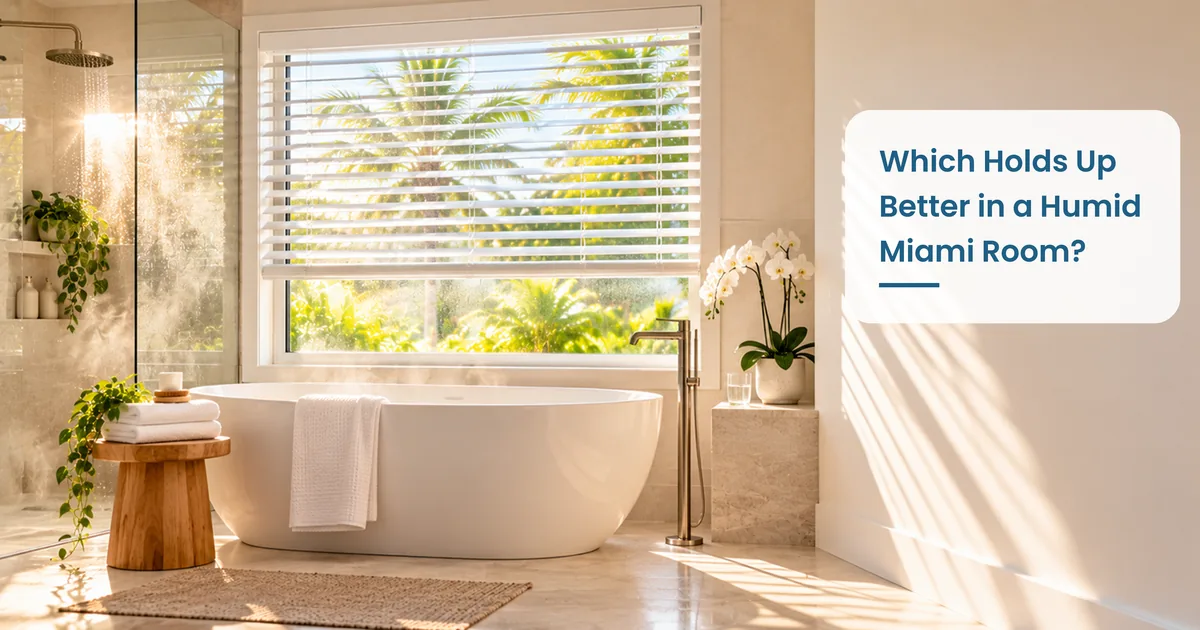
A Doral bathroom or kitchen window takes daily steam and splashes. So which material actually handles it better?
Both aluminum and faux wood resist moisture well, just through different properties. Aluminum doesn’t absorb water at all, since it’s metal, while faux wood is engineered specifically to shed moisture rather than soak it in.
- Aluminum mini blinds: completely moisture-proof, since metal can’t absorb water
- Faux wood blinds: highly moisture-resistant, with a slight edge in rigidity over time
- Real wood blinds: the one to avoid in a steamy room, since it can warp or swell
For a Pembroke Pines laundry room or a steamy bathroom, either aluminum or faux wood works well. The choice there usually comes down to the look you want rather than which one survives the humidity.
Which Lasts Longer, Aluminum or Faux Wood?
A Fort Lauderdale homeowner outfitting a long-term rental wants to know which option needs replacing less often. Fair question.
Faux wood blinds generally edge out aluminum on raw durability, since the thicker slats resist bending and denting better under daily use. Aluminum slats can bend if pressed or bumped, though a minor bend usually doesn’t affect function.
- Faux wood: thicker slats resist bending, good for high-traffic rooms
- Aluminum: lighter slats can dent under pressure but are easy and affordable to replace individually
- Both typically last 5 to 10 years with normal use, depending on slat grade
Read More: Curious how either option compares to a moisture-resistant shutter? See plantation shutters vs faux wood blinds.
Which Rooms Favor Aluminum, and Which Favor Faux Wood?
Not every room has the same priorities. Why pay for a heavier, wood-grain finish in a laundry room nobody really looks at?
- Home offices and rental units: aluminum mini blinds, for budget and color variety
- Kitchens and bathrooms: either option works well, since both resist moisture
- Living rooms and bedrooms: faux wood blinds, for the warmer, more substantial look
- Garages or utility spaces: aluminum, for the lower cost where appearance matters less
A Weston family furnishing a full house often mixes both, aluminum in utility spaces and faux wood in the rooms guests actually see. That split keeps the budget in check without sacrificing the look where it counts.
Related Service: Want to figure out which rooms call for which material in your home? Talk to our design team
Can You Mix Aluminum Mini Blinds and Faux Wood Blinds in One Home?
Absolutely, and it’s one of the more practical ways South Florida homeowners stretch a renovation budget. Why pay for the premium look in every single room?
A typical mix across 6 or 7 windows might look like this:
- Aluminum mini blinds in a laundry room, garage window, or home office
- Faux wood blinds in the living room, dining room, and primary bedroom
- Aluminum in a secondary bathroom where budget matters more than finish
- Faux wood in a guest room that doubles as an occasional showpiece
Your consultant can help you figure out where the budget split makes the most sense for your home. See our full aluminum mini blinds selection for color options, and our faux wood blinds selection for finishes.
Read More: Comparing a modern alternative for sunny rooms? See zebra shades vs roller shades.
Final Thoughts
Aluminum mini blinds and faux wood blinds both solve the budget window covering question, just at different price points. Aluminum gives you the lower-cost, moisture-proof option with a wide color range. Faux wood gives you a heavier, warmer, wood-grain finish for a bit more investment.
Why does the distinction matter beyond price? Because the wrong pick for a given room means either overspending on a utility space or underwhelming a room you actually want to impress in, whether you’re in Miami or furnishing a home anywhere else.
Walk through your home and separate the rooms by priority: budget-first spaces versus rooms where the finish matters. That split usually makes the decision easy.
Palace Interior Design, Inc. has built and installed aluminum mini blinds and faux wood blinds across Miami-Dade, Broward, and Palm Beach Counties for more than two decades, backed by manufacturer-direct pricing and a lifetime limited warranty on fabric delamination.
Ready to compare samples of both within your budget? Schedule your free in-home consultation or call 1 (866) 488-7205. You can also browse our full product range before your visit.