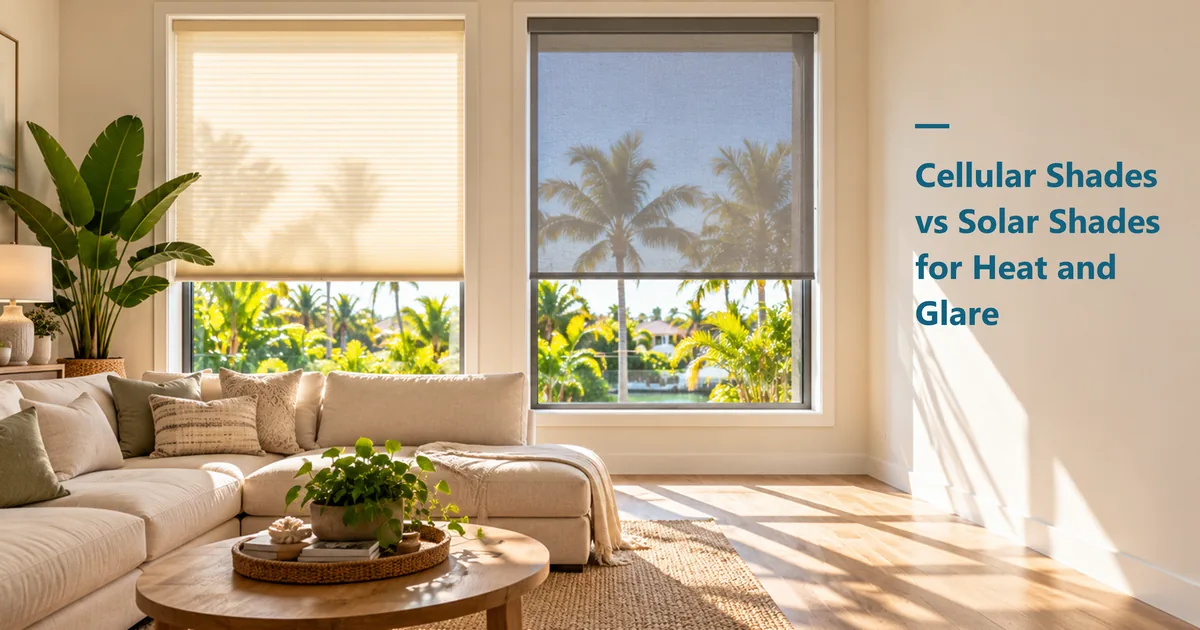
Cellular shades use honeycomb-shaped air pockets to insulate a window, which helps keep heat out and cooled air in. Solar shades use a tightly woven, UV-rated fabric that filters glare and sunlight while often preserving your outdoor view. In Miami, cellular shades tend to win on insulation, while solar shades tend to win on glare control without losing the view. Palace Interior Design, Inc. builds both across South Florida.
Key Takeaways
- Cellular shades trap air in honeycomb pockets, which slows heat transfer through the glass.
- Solar shades use a woven, UV-rated fabric that cuts glare while often keeping some view through.
- Neither shade stops 100 percent of heat gain, since Florida sun also enters through walls and roofs.
- Cellular shades suit bedrooms and offices where insulation and a tighter seal matter most.
- Solar shades suit living rooms, kitchens, and sunrooms where glare control without total blackout matters most.
A Doral kitchen with a west-facing window turns into a greenhouse by 3 p.m. most afternoons, and the AC runs harder just to keep up. That’s usually the point where a homeowner starts comparing cellular shades against solar shades.
Both are built to manage heat. Both cut glare. But they solve the problem from different angles, one through insulation and one through fabric filtration, and picking the wrong one for a given room means living with higher bills or washed-out glare longer than you’d like.
We’ll walk through how each shade actually blocks heat, where each performs best in a South Florida home, and which rooms tend to favor one over the other. If you’re still deciding between broader window treatment categories, our guide to blinds vs shades vs shutters covers that comparison first.
Let’s start with how cellular shades handle heat.
What’s the difference between cellular shades and solar shades?
Cellular shades, also called honeycomb shades, use pleated fabric cells that trap a layer of air between the window and the room, which slows heat transfer. Solar shades use a single flat piece of woven fabric rated to block UV rays and filter glare while often keeping your outdoor view intact. Both help manage Miami’s sun exposure, but they do it through different mechanics: insulation versus filtration.
How Do Cellular Shades Block Heat?
Ever notice how a single-pane window in a Kendall home feels warm to the touch even with the AC running? That’s heat moving straight through the glass.
Cellular shades address this with structure, not just fabric. The pleated cells form rows of sealed air pockets between the shade and the window, and that trapped air acts as a buffer against heat transfer in both directions.
- Single-cell shades offer one row of air pockets
- Double-cell shades offer two rows, which adds more insulation
- A tighter side-track or top-down mount reduces air leaks around the edges
In a Kendall bedroom with afternoon sun, that trapped-air buffer is often the difference between a room that stays comfortable and one where the AC never shuts off. Most honeycomb shades come in light-filtering or room-darkening fabric, so you can also control how much daylight gets through while you’re managing heat.
Are cellular shades good for insulation in a hot climate?
Cellular shades are one of the stronger options for insulation because of their honeycomb structure, which traps air and slows heat transfer through the window. They work well year-round in Florida, keeping cooled air in during summer months. They won’t fully offset heat gain from an uninsulated wall or an old window frame, so your consultant can walk through which rooms benefit most.
|
Let’s Talk Strategy: Not sure if insulating cellular shades fit your hottest room? Talk it through with our team at no cost. |
How Do Solar Shades Block Heat and Glare?
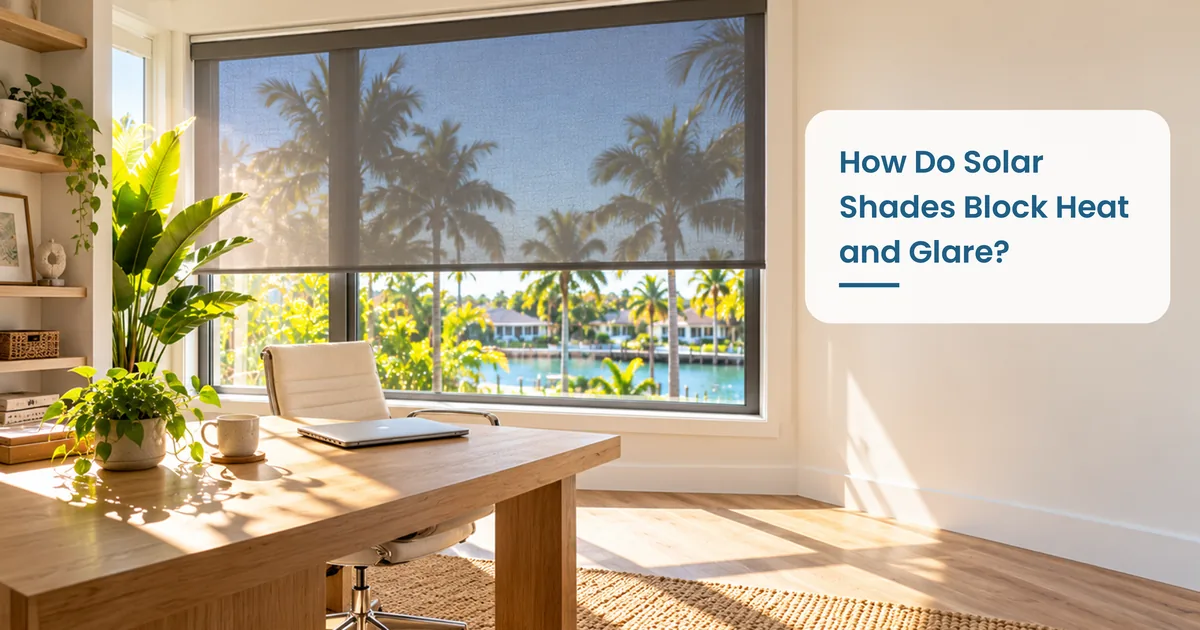
Picture a Plantation sunroom where the glare off the pool makes the TV unwatchable every afternoon. That’s the problem solar shades are built to solve.
Solar shades use a single piece of tightly woven fabric, rated by its openness factor, which determines how much light and heat pass through versus how much gets filtered out.
| Openness factor | Light level | Best for |
|---|---|---|
| 1-3% | Low light, strong glare control | Media rooms, home offices |
| 5-10% | Moderate light, balanced view | Living rooms, kitchens |
| 14%+ | More light, lighter glare reduction | Sunrooms, covered patios |
That range gives you 3 practical tiers to choose from under one shade type. A Boca Raton living room that needs glare control without losing the backyard view usually lands in the 5 to 10 percent range.
Do solar shades actually keep a room cooler?
Solar shade fabric reduces heat gain by filtering sunlight through a UV-rated weave before it enters the room, which cuts down on glare and some surface heat. They work best against direct sun exposure through glass, rather than insulating the window itself. Your consultant can bring openness-factor samples so you can compare how much heat and glare each one filters in your actual room.
|
Get a Custom Quote: Tell us which room gets the worst afternoon glare and we’ll recommend the right fabric. |
Which Cuts Glare Better, Cellular or Solar?
Here’s the question that comes up in almost every consultation. Which shade actually stops the glare on your screen?
Solar shades generally win here, since their fabric is engineered specifically to filter UV rays and glare while keeping some visibility through the weave. Cellular shades reduce glare too, but their main strength is insulation, not light filtration.
- Solar shades: built for glare control first, with heat filtration as a related benefit
- Cellular shades: built for insulation first, with some glare reduction as a side effect
- For a TV or home office screen that fights glare daily, UV-rated solar fabric usually solves it faster
A Coconut Creek home office with a south-facing window typically does better with solar shades for exactly this reason. Cellular shades still help, but the glare reduction is secondary to their insulating job.
Most homeowners settle this question within a few minutes once they’ve compared fabric swatches side by side in the room that actually bothers them.
Read More: Curious how these two fit into custom window coverings overall? See our guide to custom window treatments in Miami.
Do Cellular Shades or Solar Shades Help More With Energy Bills?
A Wellington homeowner running central AC through a Florida summer feels every degree the house loses. Which shade actually helps the bill?
Cellular shades typically have the edge here, since the trapped-air design directly slows heat transfer through the glass, which means your AC cycles less often. Solar shades help indirectly by blocking some heat before it reaches the glass, but they don’t insulate the window the way a honeycomb structure does.
- Cellular shades: insulation-driven savings, strongest on windows that face intense afternoon sun
- Solar shades: glare and surface-heat reduction, strongest where view matters as much as temperature
- Pairing double-cell shades in bedrooms with solar shades in living areas covers both goals across a home
Neither shade replaces proper window sealing or impact glass if those are outdated, so your consultant can flag any windows where a shade alone won’t solve a bigger heat problem.
Which Is Better for a Sunroom or a West-Facing Window?
A Pembroke Pines sunroom with glass on three sides is the toughest test for either shade type. So which one actually holds up?
Solar shades tend to perform better here because sunrooms are about managing glare and view at the same time, not sealing in cooled air the way a bedroom would. A lower openness factor fabric cuts the worst of the afternoon glare while still letting you see outside.
West-facing bedroom or office windows lean the other way. Cellular shades in a room-darkening fabric handle the late-day heat spike better, since insulation matters more once the sun is low and intense.
|
Related Service: Want to see fabric samples for your sunroom or west-facing room side by side? |
Can You Mix Cellular and Solar Shades in the Same Home?
Absolutely, and it’s one of the more common setups across South Florida homes with mixed room types. Why limit a whole house to one shade type when each room has a different job to do?
A typical mix across 5 or 6 windows might look like this:
- Double-cell honeycomb shades in bedrooms for insulation and room-darkening
- Solar shades in the living room or kitchen for daytime glare control with a kept view
- Cellular shades in a home office that needs quiet and a stable temperature
- UV-rated solar fabric in a sunroom or covered patio area for heat and glare without losing the outdoor view
Your consultant can help coordinate colors and fabrics so the combination still reads as one cohesive look. See our full cellular and honeycomb shades selection for insulation options, and our solar shades selection for openness-factor fabrics.
Read More: Comparing two other shade types for glare and light control? See zebra shades vs roller shades.
Final Thoughts
Cellular shades and solar shades both manage Florida’s sun, just from different angles. Cellular shades insulate the window itself, which helps on energy bills and temperature swings. Solar shades filter glare and heat through the fabric while keeping more of your view intact. Neither is the wrong choice.
Why does the distinction matter beyond comfort? Because the wrong shade for a hot, glaring room means a higher cooling bill or a washed-out TV screen longer than it needs to be, whether you’re in Miami or anywhere else the sun runs this hot.
Walk through your home and think about which rooms need insulation most and which ones need glare control without losing the view. That’s where the choice usually becomes clear.
Palace Interior Design, Inc. has built and installed honeycomb shades and solar shades across Miami-Dade, Broward, and Palm Beach Counties for more than two decades, backed by manufacturer-direct pricing and a lifetime limited warranty on fabric delamination.
Ready to compare insulation and glare-control samples in your own home? Schedule your free in-home consultation or call 1 (866) 488-7205. You can also browse our full product range before your visit.